
BASEMENT WATERPROOFING · REYNOLDSBURG, OH
Foundation Wall & Drainage Repair in Reynoldsburg, OH
Most Reynoldsburg basements face a combination of expansive clay soil, dense till that restricts downward drainage, and rapid stormwater runoff into the Blacklick Creek watershed. When clay expands against a foundation wall, it creates immense lateral pressure that leads to stair-step or horizontal cracking, bowing walls, and seepage. Because the soil holds water against the foundation rather than letting it drain, patching a crack from the inside without addressing the drainage and soil pressure will only fail again. We diagnose roof runoff, grading, wall-floor seepage, and foundation movement together to provide a lasting repair. Call (614) 739-0757 for a free on-site inspection in Reynoldsburg and the east Columbus area.
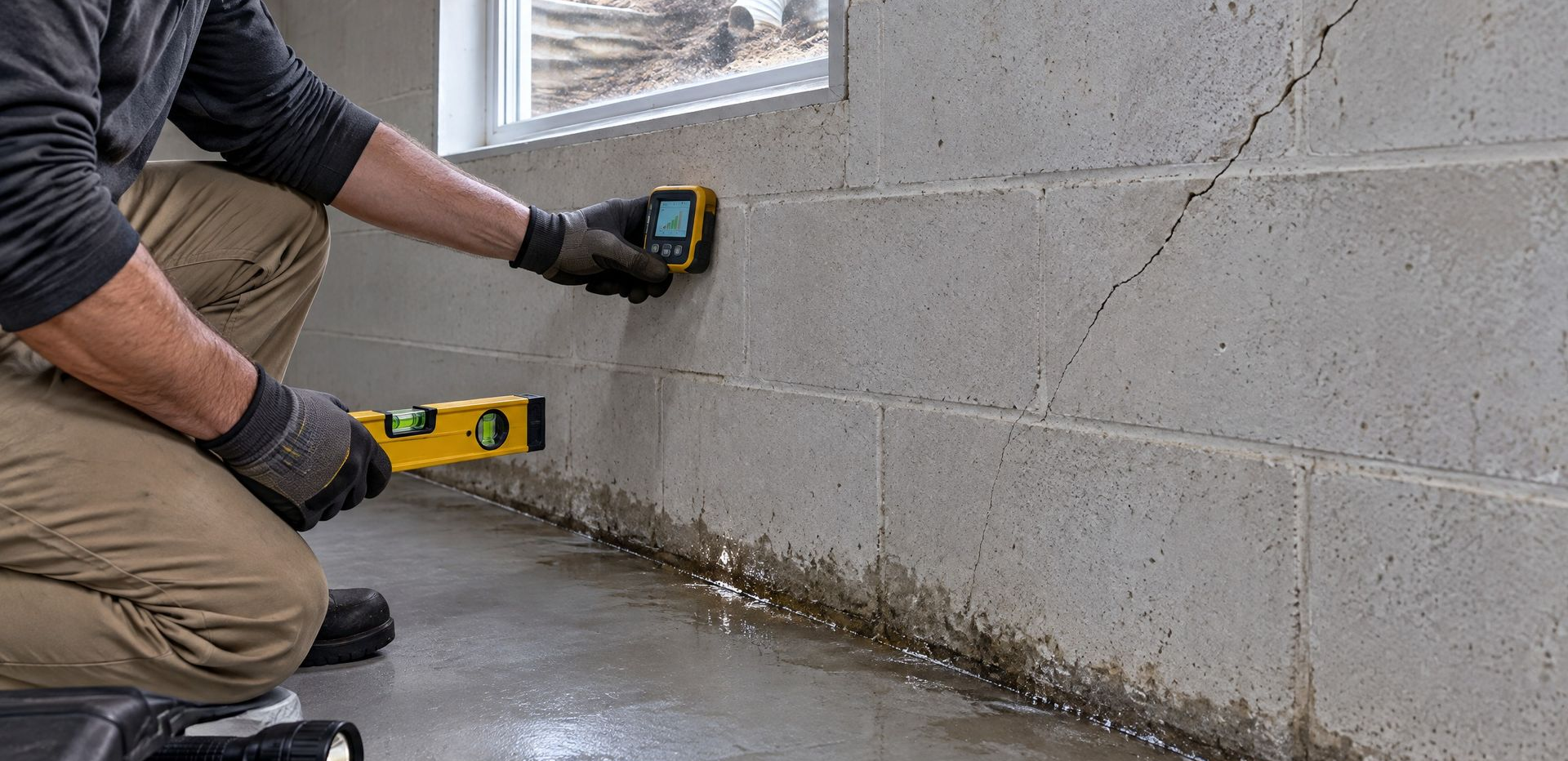
What foundation wall and drainage repair involves
We start by identifying the source of the water and the type of movement your wall has experienced. In Reynoldsburg's clay soils, a cracked or bowing wall is often the result of hydrostatic pressure and soil expansion. Repairing it means stabilizing the wall to prevent further movement and relieving the water pressure behind it. Depending on the severity of the deflection, we may use carbon fiber straps for minor bowing or steel I-beam bracing for more significant movement. For cracks that are simply leaking without structural movement, we use specialized injection techniques that bond the concrete and seal the void.
However, the most critical part of the repair happens outside the wall. If water continues to pool against the foundation, the pressure will return. We evaluate your home's grading, downspout extensions, and yard drainage to ensure surface water is directed away from the house. For subsurface water trapped by dense till, we may recommend interior drain tile and a sealed sump pump system to manage wall-floor seepage, or an exterior waterproofing membrane and French drain to stop water before it reaches the wall. A complete repair addresses both the structural damage and the drainage issues causing it.
When you need foundation repair: signs and situations
These are the symptoms specific to clay soil expansion and poor drainage, which are common across the east Columbus area.
- Horizontal cracks running along the middle of the foundation wall
- Stair-step cracking that follows mortar joints in block walls
- Visible inward bowing or deflection of the foundation wall
- Water seeping through cracks or where the wall meets the floor
- Doors or windows on the upper floors that stick or will not close properly
- Pooling water near the foundation after heavy rain in the Blacklick Creek watershed
Get Your Free Quote
Why foundation walls fail in Reynoldsburg
Reynoldsburg's foundation issues are driven by the specific soil and drainage conditions of the east Columbus area. The local soil profile features expansive clay and dense hardpan till. When it rains, the clay absorbs water and expands significantly, exerting tremendous lateral pressure against foundation walls. During dry spells, the clay shrinks and pulls away, removing support. This continuous cycle of shrink-swell movement is what causes horizontal cracking and bowing in both poured concrete and block foundations. The dense till underneath prevents water from draining downward, leaving it trapped against the foundation walls.
Compounding the soil issue is the rapid development of the Blacklick Creek watershed. As more surfaces are paved and built upon, stormwater runoff increases, often overwhelming older or undersized neighborhood drainage systems. This sends more surface water toward homes, where it pools against foundations if the grading is inadequate. When you combine expansive clay, poor downward drainage, and increased surface runoff, the result is immense hydrostatic pressure. That is why a simple crack injection often fails—it seals the leak but does nothing to relieve the pressure or manage the water.
What affects the cost of foundation repair in Reynoldsburg
Priced by the extent of the damage and the required drainage solutions. Full planning ranges are on our cost page, but an on-site quote is required for exact pricing.
- The length and severity of the cracks needing repair or injection
- The amount of inward deflection, which determines if carbon fiber or steel bracing is needed
- Whether interior drain tile and a sump pump are required to manage seepage
- The need for exterior waterproofing, membrane application, and French drains
- Exterior corrections such as regrading or extending downspouts away from the foundation
- Access to the work area, including removing finished basement walls or navigating landscaping
Repair or rebuild the wall
Most foundation walls we inspect in Reynoldsburg, Pickerington, and Gahanna can be repaired without the need for a full replacement. Cracks that are simply leaking water can often be permanently sealed, and walls with minor to moderate bowing can be stabilized using carbon fiber straps or steel I-beams. These stabilization methods stop further movement and restore the structural integrity of the wall, provided the underlying drainage issues are also addressed. A stabilized wall combined with proper water management is a lasting solution that avoids the disruption of a major rebuild.
However, if a wall has experienced severe deflection, significant shearing, or has structurally failed due to years of unaddressed clay expansion and hydrostatic pressure, stabilization may no longer be viable. In these extreme cases, the safest and most effective solution is to excavate the exterior, relieve the soil pressure, and rebuild the damaged section of the wall. We carefully measure the deflection and assess the structural integrity during our inspection. If your wall requires rebuilding rather than repair, our team will explain exactly why and outline the process clearly.
Our step-by-step repair process
- STEP 1
On-site diagnosis — measure wall deflection, inspect for cracks, and evaluate exterior drainage and grading
- STEP 2
Identify the specific soil and water pressures affecting the foundation in your Reynoldsburg neighborhood
- STEP 3
Written fixed-price quote detailing the required structural repairs and drainage improvements
- STEP 4
Permit requirements should be confirmed before work begins, and the written scope should identify responsibility for permits
- STEP 5
Preparation of the work area, including protecting landscaping or managing interior access
- STEP 6
Installation of structural supports (carbon fiber or steel) and sealing of foundational cracks
- STEP 7
Implementation of drainage solutions, such as interior drain tile or exterior French drains
- STEP 8
Final exterior corrections, site cleanup, and a complete walkthrough of the repaired system
Timeline and what to expect
The timeline for foundation wall and drainage repair depends on the scope of the solution. Simple crack injections or the installation of carbon fiber straps can often be completed in a single day. If the project requires interior drain tile and a sump pump installation, expect the work to take two to three days. Comprehensive exterior waterproofing, including excavation, membrane application, and French drain installation, is more extensive and weather-dependent, typically requiring three to five days. We will provide a clear schedule during your consultation and keep you informed throughout the process, ensuring minimal disruption to your home.
GOOD TO KNOW
FAQs
Why did my foundation wall crack horizontally?
Horizontal cracks are typically caused by lateral pressure from the soil outside. In Reynoldsburg, the expansive clay soil swells significantly when wet, pushing against the foundation. Over time, this repeated pressure can cause the wall to bow inward and crack horizontally, usually near the middle of the wall.
Can I just patch the cracks myself?
Surface patching with hydraulic cement or caulk is only a temporary cosmetic fix. It does not address the structural movement or the hydrostatic pressure causing the crack. To permanently solve the issue, the crack must be properly injected or stabilized, and the exterior drainage must be corrected to relieve the pressure.
Do I need interior or exterior drainage?
It depends on how water is interacting with your foundation. If water is seeping up through the floor or at the cove joint due to high groundwater trapped by dense till, an interior drain tile system is usually the most effective solution. If surface water is pouring against the wall due to poor grading or runoff, exterior waterproofing and French drains may be necessary.
Is carbon fiber or steel bracing better for bowing walls?
Both are highly effective, but they are used for different levels of severity. Carbon fiber straps are incredibly strong and have a low profile, making them ideal for walls with minor to moderate bowing. Steel I-beams are used for walls with more significant deflection or shearing, providing robust stabilization. We measure the movement to determine the right approach.
Will repairing the wall stop my basement from flooding?
Often yes, and this is the sequencing question that saves people the most money. Installing drainage against a wall that is still shedding means you have protected the floor while the wall continuRepairing the structural damage is only half the solution. If you stabilize a wall but leave the poor drainage in place, water will continue to pool against the foundation, creating pressure and finding new ways in. A lasting repair combines wall stabilization with proper water management, such as regrading, downspout extensions, or installing a drainage system.es to deteriorate. If the sandstone is actively spalling we normally repoint first, then drain. If the wall is sound and the problem is water at the footing, drainage alone is the answer. The inspection decides which, and it is free.
Get a lasting solution for your foundation
Free on-site inspection in Reynoldsburg and east Columbus. We evaluate the structural movement, assess your drainage, and provide a written fixed-price quote to solve the problem permanently.